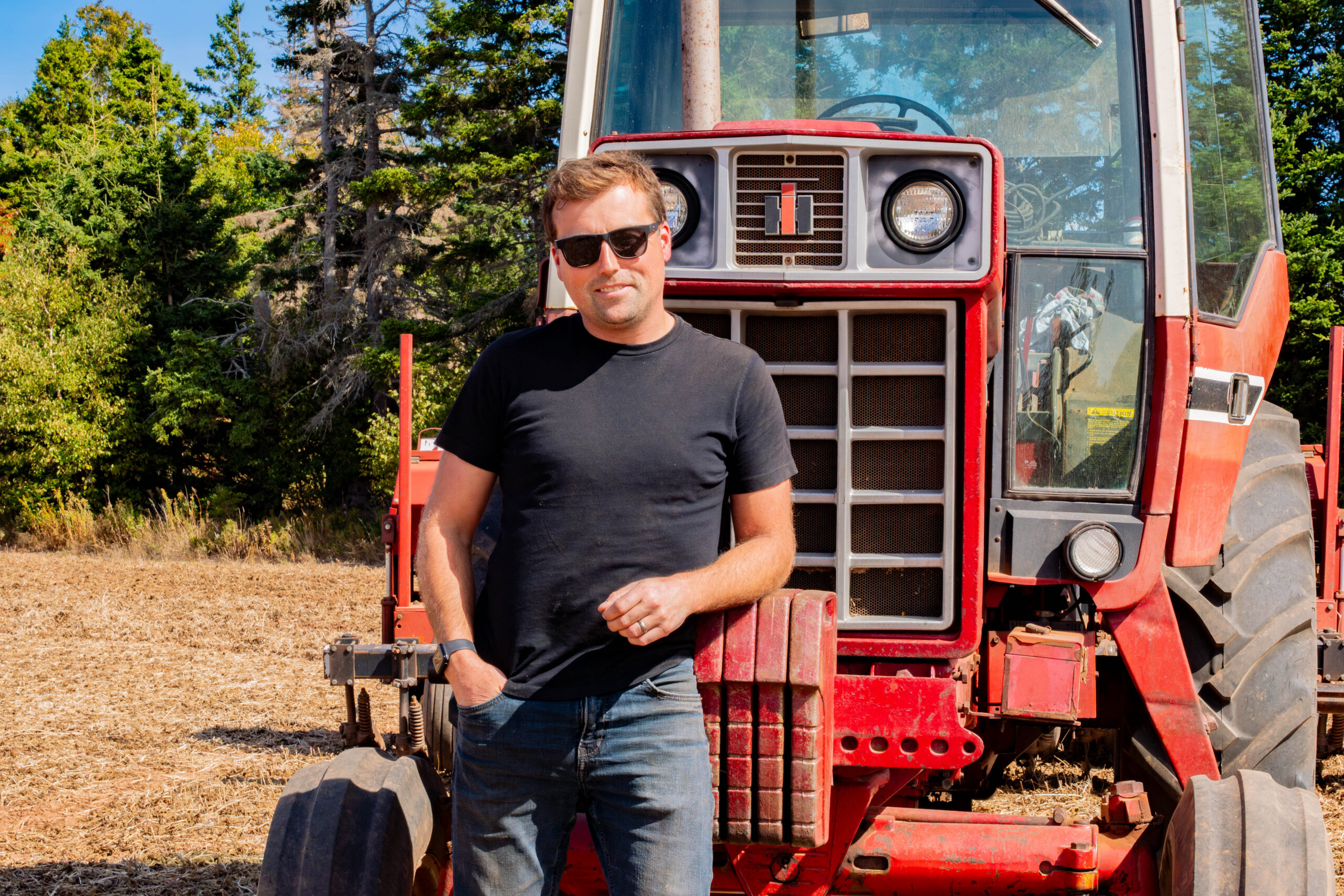
Rice Point Farms
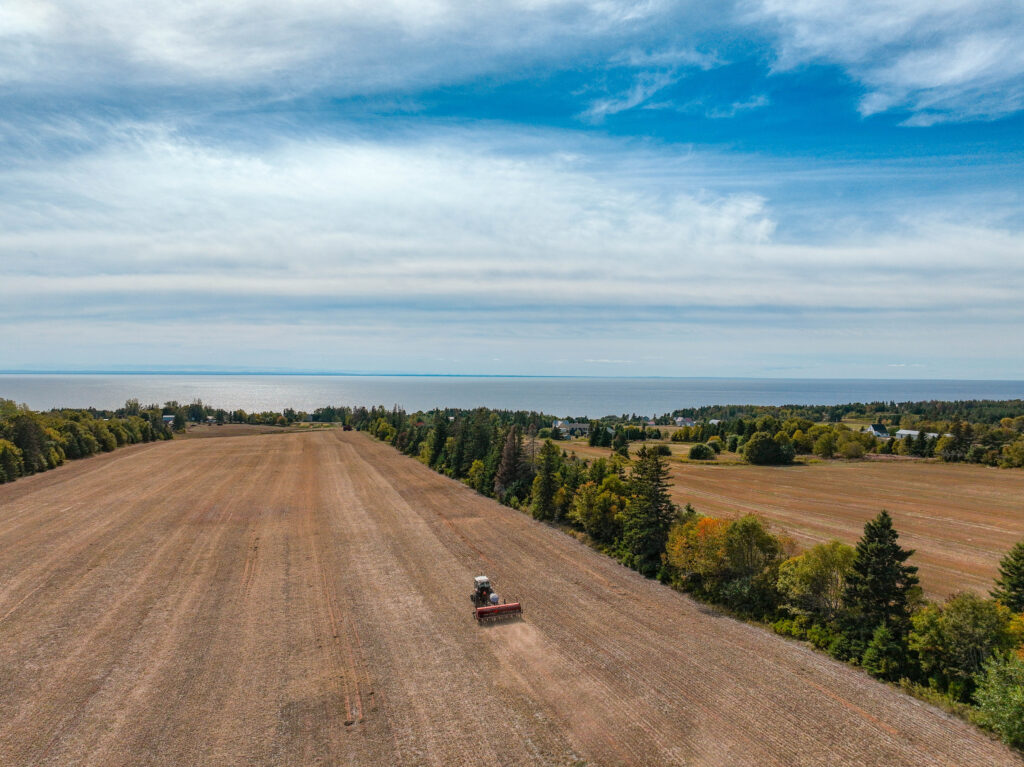
Although Tobin Stetson planted his first official crop in 2016, he’s felt like a farmer since he was 10 years old. The 6th generation of his family to farm on PEI’s south shore, Tobin operates Rice Point Farms alongside his wife Ellen and their children Gus (8), Lou (5), and Elsie (2), growing soybeans, wheat, barley, and sweet corn.
A participant of the On-Farm Climate Action Fund (OFCAF) since it launched in 2022, the program has allowed Tobin to try new things on the farm, while limiting the risks involved.
“As a small farm, there can be significant hurdles to implementing new management practices that can provide long-term benefits. It’s even harder to adopt these practices if the capital cost of equipment is high. The OFCAF program provided good incentives to try new things.”
Improving Nitrogen Management
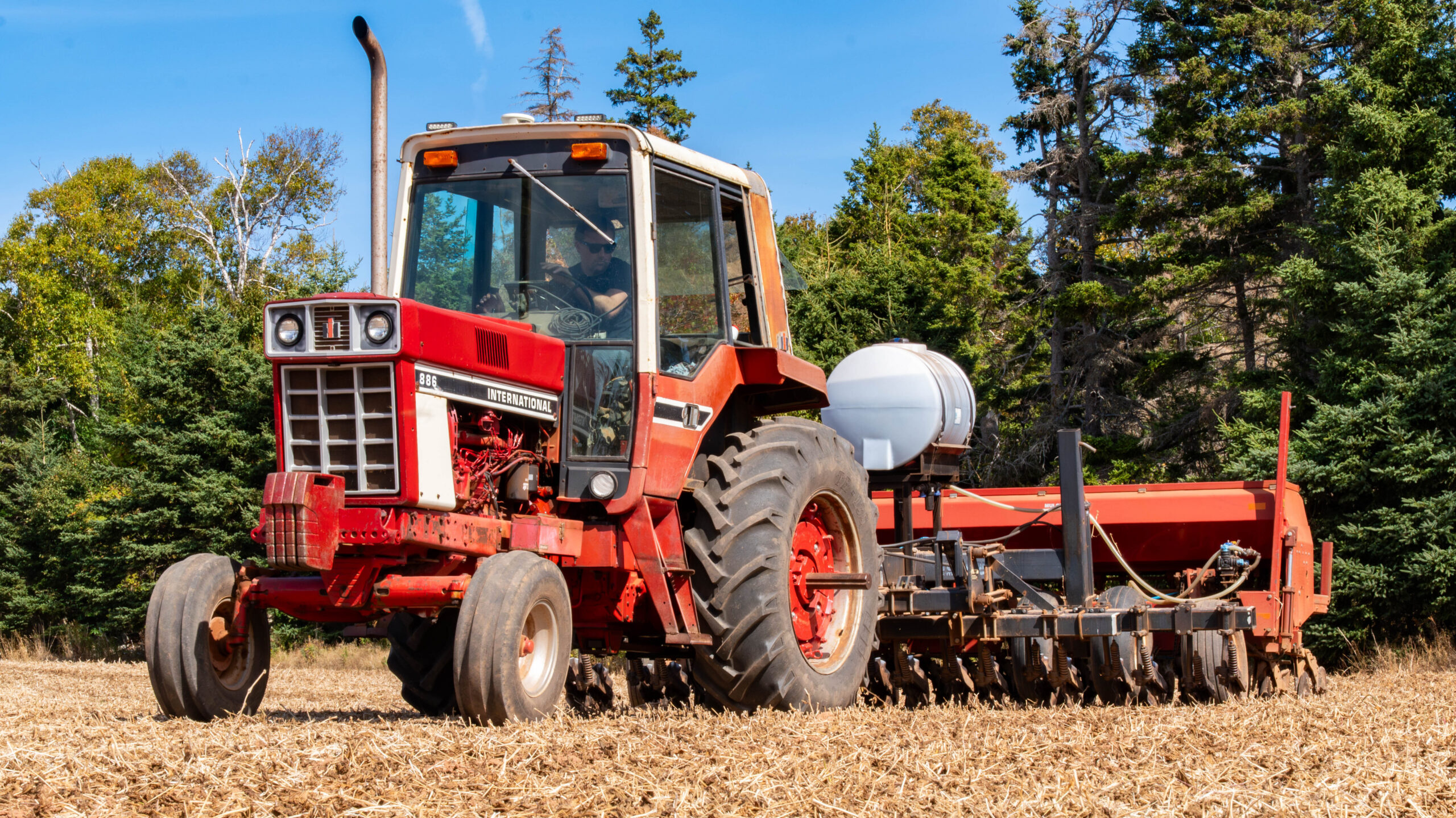
Through several OFCAF projects, Tobin has worked to improve his nitrogen management. He has improved his nitrogen use efficiency with split applications of fertilizer and enhanced efficiency nitrogen fertilizer, better matching nitrogen supply with crop demand. He’s also used SWAT mapping to identify unique management zones within fields and installed a liquid fertilizer starter kit to improve precision and placement.
Cover Cropping
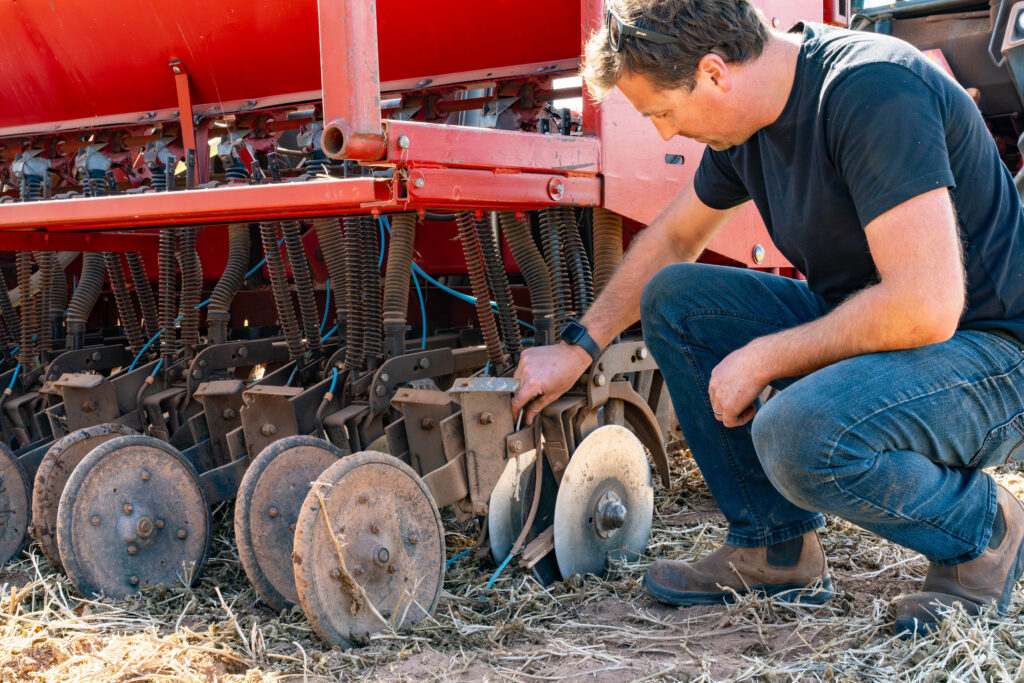
Cover cropping decreases soil erosion and keeps living roots in the soil at the farm, and Tobin plans to continue this practice. With the help of program funding, he purchased a Krause 4400 packer to improve seedbed preparation, offering less disturbance when planting cover crops.
Future Plans
Looking ahead, Tobin can already see the benefit to expanding on the lessons learned through OFCAF projects. “I now have the flexibility to use granular or liquid fertilizers depending on the markets, crop needs or weather conditions, and can quickly switch between the two. While the seasons change and growing seasons unfold, I have the knowledge and experience from participating in OFCAF to use these new practices as they’re needed.”
When asked about future projects, Tobin already has ideas; “ electrical conductivity soil mapping and prescriptive soil sampling are some things I’d like to try next to better manage in-field variabilities.”
Tobin’s advice to other farmers interested in implementing new practices on their farms?
“If you think an OFCAF activity can fit into your operation, I’d recommend trying it. It’s a great resource to help you get started, and there’s little harm in trying something new.”
OFCAF is funded by Agriculture and Agri-Food Canada’s Agricultural Climate Solutions – On-Farm Climate Action Fund.